Chain-Link Privacy Slats and Screens for Warehouse Yards
At a warehouse yard, first decide whether slats need to fit an existing diamond mesh or a separate screen needs its own edge attachments. Relia lists a 31 mm slat-profile example and a screen option. Bring the actual mesh and route plan so the quote can include fit, service openings and the site exposure review.
- Slat fit input
- Diamond opening, orientation and the profile to try
- Screen input
- Coverage, edge attachments and the boundary reviewed for exposure
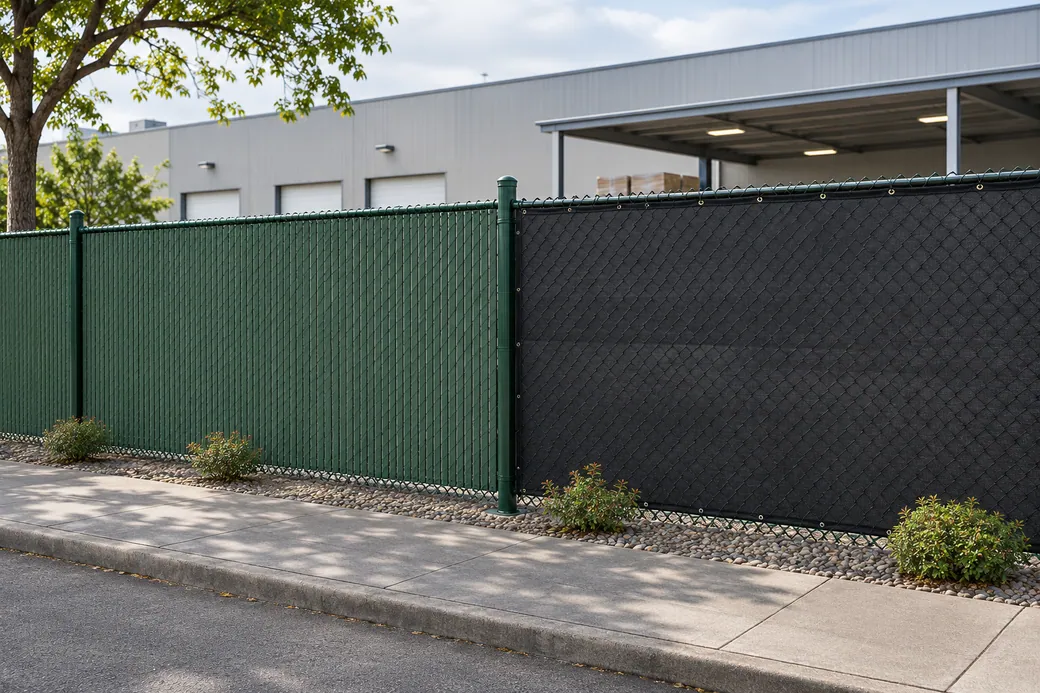
Slats fit the diamond and its orientation
Relia lists a slat option for 50 × 50 mm mesh and a separate screen-net configuration. If you send the aperture, fabric height and a photograph of the top and bottom edges, we can review the slat fit or identify the attachment details for the screen. Take the opening across the direction the slat will pass and include a short offcut in the trial where available.
See the 50 × 50 mm privacy-slat configurationOn a 50 mm chain-link fence, record how the opening was measured. Check the slat section, usable length and locking detail in a sample bay. The old mesh tension and the edge condition affect the trial fit.
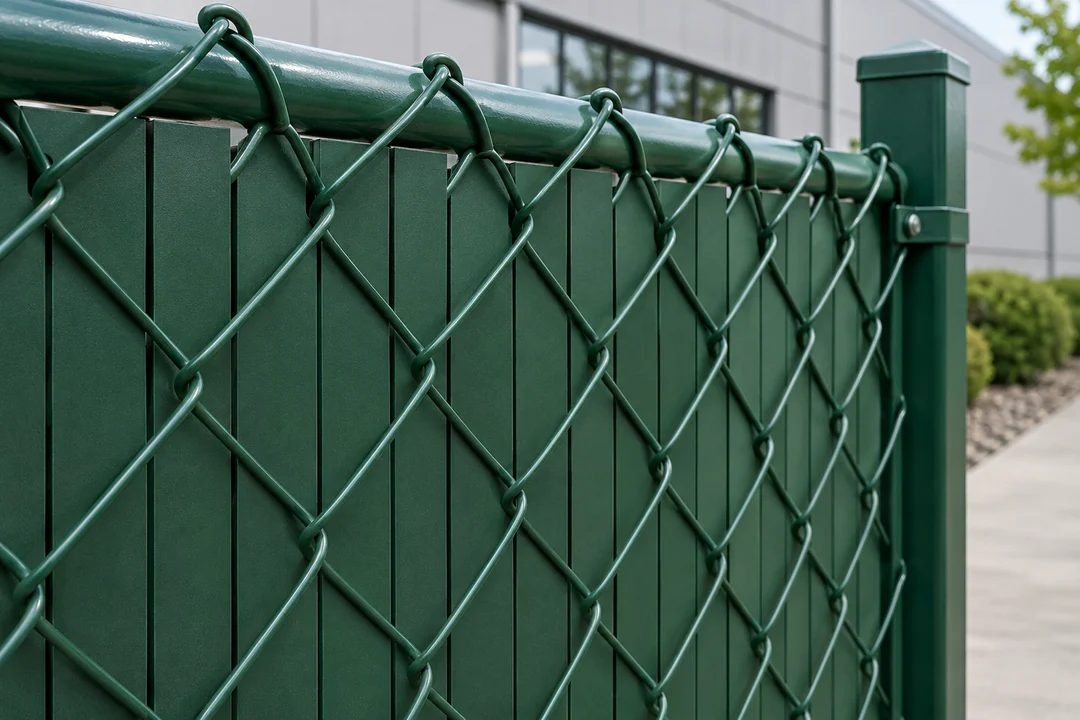
- Privacy slats
- Trial the selected slat against the actual 50 × 50 mm diamond orientation and coated wire.
- Screen netting
- Quote the selected net, perimeter attachments and any reinforcement as separate items.
- Before committing to coverage
- Take the screened area and the actual support conditions into the assembly review.
A fitted slat sample and a screen edge sample
Give the two privacy methods their own trial item. The site can then compare the appearance, gaps, service openings and measurements that matter to each use.
Compare the two yard purchase decisions- Slat in the diamondPhotograph the inserted sample from the same direction in which the mesh is woven and show the clearance.
- Screen at an edgeShow the hem or edge fastening, attachment interval requested and boundary location.
- Service openingKeep a walkway, gate or maintenance gap on the drawing for both candidate layouts.
- Exposure reviewAsk the project reviewer to check the planned area and support arrangement for the chosen coverage.
Slat and screen purchase decisions for one yard
For a 20 m straight run, the slat listing's reference of 24 pieces per metre gives about 480 pieces before gate deductions, short bays or spares. Check the rate with one fitted bay and use the measured quantity for the order. Compare quotations with each privacy method matched to a named section of the yard.
| System | Measure or select | Confirm on the sample or drawing |
|---|---|---|
| Slatted mesh | Net mesh opening, slat profile, usable height and bottom lock | Insertion and locking on the retained wire |
| Screen fabric | Panel length, screen height and edge attachments | Attachment pattern, supply per run and review of the whole fence under exposure |
| New mesh and posts | Finish, opening, post positions and gate breaks | Panel or roll quantities, post section and any supports affected by screen coverage |
Screen edges and attachments shape the order
Mark starts, ends and access points where the screen will be attached. If one section needs regular removal, list that separately so the quote can address the attachment and spare materials. Keep ties, edge finishing and overlaps on the screen line and specify a sample before agreeing the order.
Document two different fitted samples. The slat listing gives a 31 mm width and 6.3 mm thickness. The screen-net listing gives a 50 × 50 mm mesh and a 3 mm wire option. Document slat insertion in an actual mesh offcut and attach a separate close-up of the screen edge at its fixing.
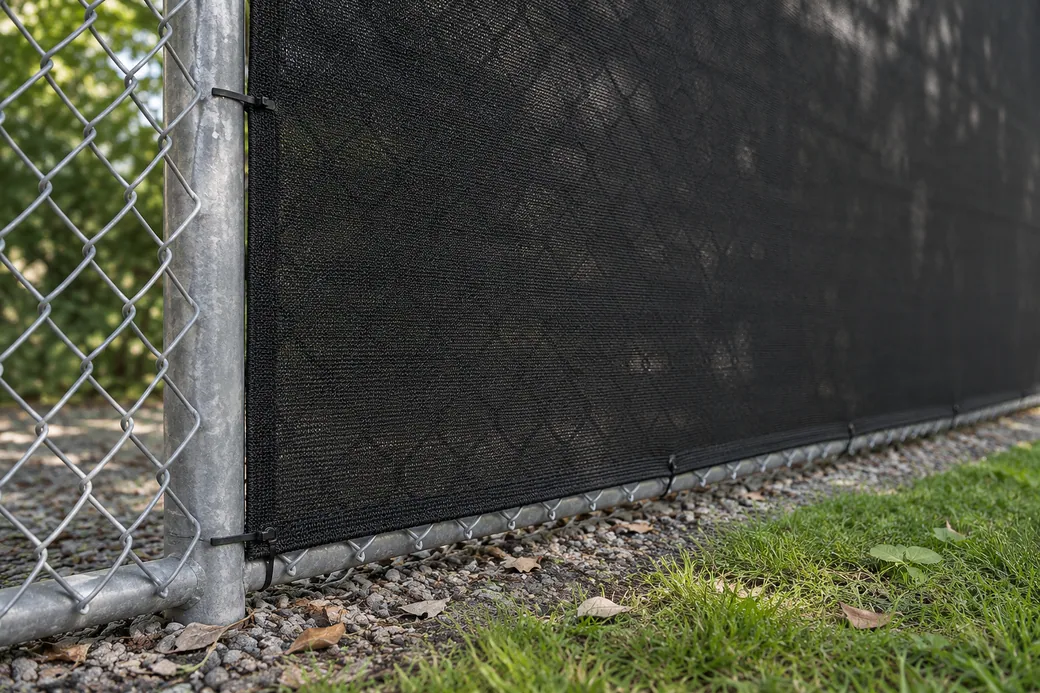
Screen coverage belongs in the site review
Treat the screen and its supporting fence as an assembly. Give the project team enough information to review the changes. Refer the change in coverage to the site reviewer using the actual run and supports.
- Existing fenceRecord post condition and available drawings.
- ExposureMark changes in screen area or wind exposure.
- ApprovalKeep relevant project conditions in the request.
Plan the new yard by service openings
Break up long runs at gates, maintenance locations and major changes in the layout. A privacy material schedule by zone helps you order replaceable sections and identify the spares your team can hold. Mark service routes and gates on the yard view before allocating slats or screen rolls.
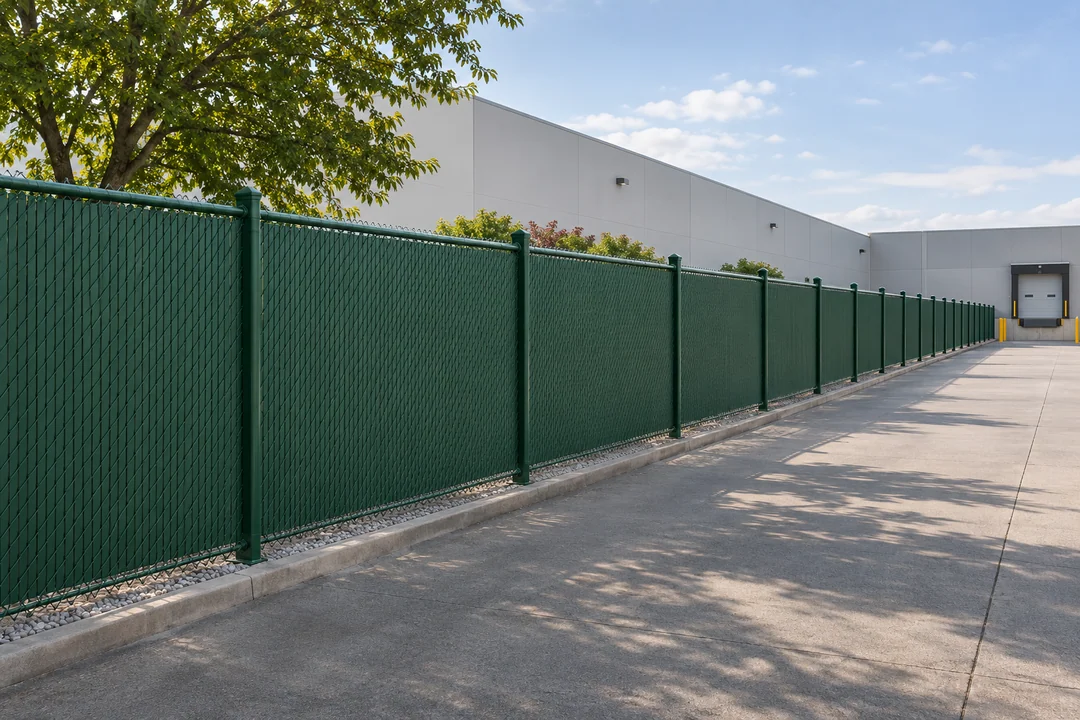
Slat profile, screen edges and sample fit
The slat cross-section governs fit through the diamond. A screen has a separate edge and fixing detail. Set those details before calculating quantities for the full run. Approve the fitted sample using the actual mesh and edge where the selected product will sit.
- Material and dimensionsTrial the slat in the coated diamond
Use one actual 50 × 50 mm mesh sample, including wire thickness and diamond orientation, to settle insertion and retention.
- Fabrication and fitDefine how the screen edge is made
Put edge reinforcement, fixing type and selected net on the same line so the support review uses the actual attachment.
- Inspection evidenceReview the coverage and the support together
Measure the covered area and confirm the bases or posts and wind conditions for the screened configuration before multiplying quantities.
Detailed checks for this order
- Match a slat to the wire fabricUse the actual diamond orientation and finished wire thickness. Verify the slat cross-section on a sample and establish the insertion direction and end retention for the ordered length.
- Specify how the screen is finishedConfirm the net material and whether the edge is hemmed or otherwise reinforced. Record how the attachment is finished and spaced. Ask for the exact configuration covered by the supplier's shade figure and the geometry the installer uses for their wind and support review.
- Use a short bay to count partsFit a short sample strip and check interference near terminals. The listed 24 slats per metre is a quantity reference for one configuration. Recount on the sample before multiplying by your run length.
A 31 mm slat profile and a separate screen specification
The screen's 50–90% field is labelled sunshade rate. Ask for the specific fabric data needed for airflow, wind review or visibility. The listed post is a product option that needs to be paired with the actual site and fixing detail. Record the panel and screen specifications separately when comparing a product listing.
50 mm chain-link with screen net
- Details in the description
- 50 × 50 mm and 3 mm wire example. The listing gives 50–90% sunshade and a 42 × 42 × 1.5 mm post option
- Quote check
- Separate mesh finish from fabric, attachments, selected post and site review
- Details in the description
- 50 × 50 mm mesh, 31 mm wide and 6.3 mm thick slat options, about 24 per metre as listed
- Quote check
- W-type, flanged or standard sample, measured quantity and locking detail
ASTM F567 chain-link installation practice
Browse related products · Chain-Link Privacy Fencing · Chain-Link Fencing
Get the chain-link and warehouse layout right first
Use the roll guide to identify the underlying mesh and fittings. Use the warehouse-perimeter comparison for open-view runs where privacy is optional. For a new boundary, use the system guide before specifying an infill or screen accessory.
- If the fence fabric is part of the orderWholesale Chain-Link Rolls and Replacement FabricSpecify height, finished wire, end fittings and roll lengths first.
- If delivery lanes or service gates change the layout3D Welded Mesh and Chain-Link for Warehouse PerimetersRecord the access requirements before specifying fence sections and screen areas.
Share the panel or mesh measurements
Send the mesh aperture and direction, clear run lengths, access openings and photos of retention points. Mark the screened segments on the layout.
- Mesh
- Opening, height and condition
- Infill
- Slats or screening, by run
- Site
- Attachments, access and wind brief
Shuyuan Road, Qingdao, Shandong, China
- [email protected]
- +1 404 203 0971
- Phone
- +86 18561762631