Fence Buyer FAQ and Order Checks
Before ordering a Relia fence or steel component, turn nominal dimensions, finish options and fitting choices into an identified quote line. This FAQ helps buyers who already have a shortlist check the dimensions, hardware, documents and packaging that affect acceptance. Keep the approved line reference for receiving and reorders.
- Resolve first
- The exact dimensions and hardware for the selected assembly
- Evidence for a repeat order
- Approved revision, receiving marks and any accepted dimensional record
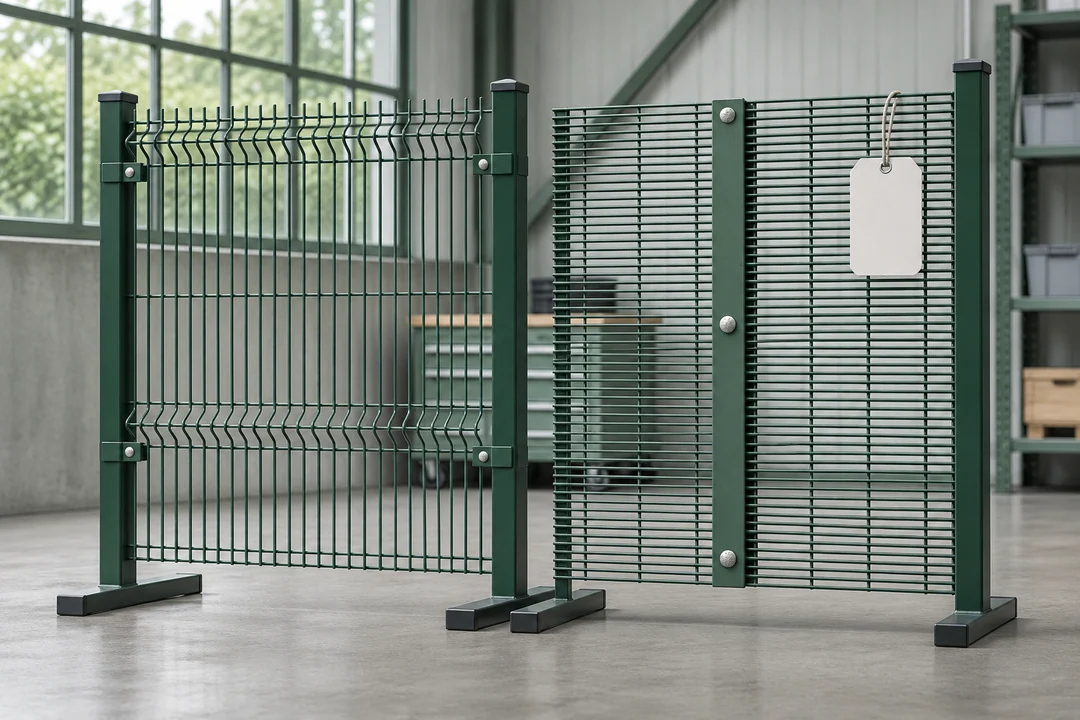
Nominal labels become measured order dimensions
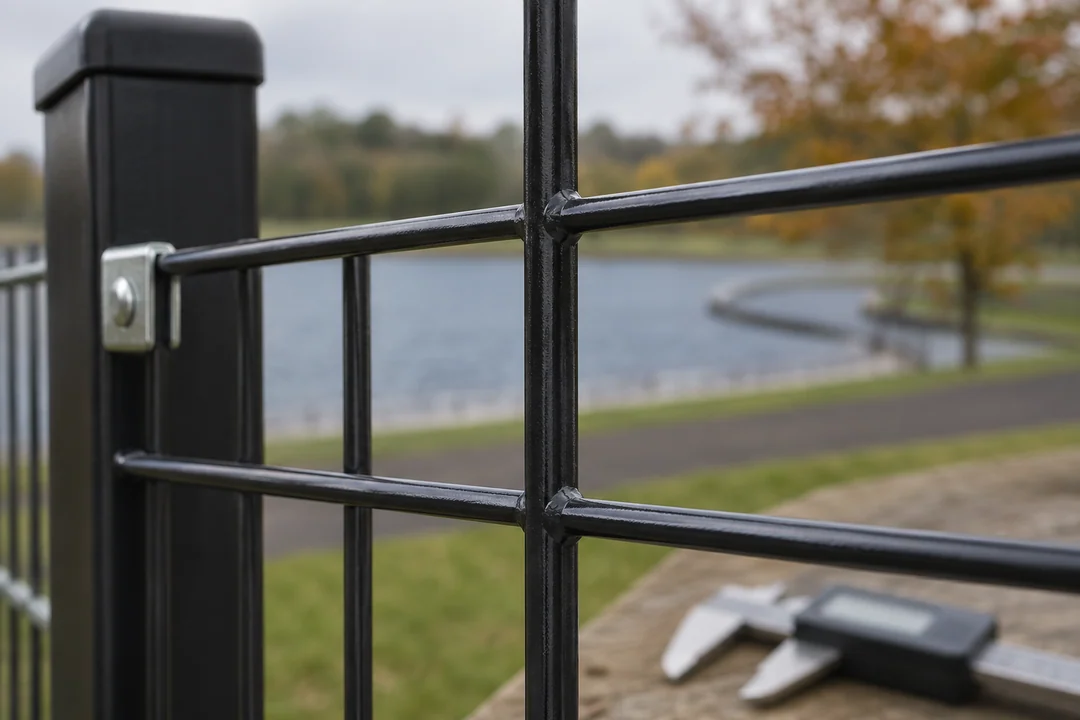
The 656 and 868 labels represent different wire sequences. The twin-wire product lists 6/5/6 mm and 8/6/8 mm and multiple apertures. Record the three wire measurements and the actual aperture separately from the family name. Relia can use the measured view to confirm which dimensions the quote should identify.
- Before getting a price
- Agree the measuring points and the actual items included in the quote.
- Before approving production
- Review the finished sample or drawing, fittings and the applicable evidence.
- Before receiving a repeat order
- Keep the accepted revision, finish and packing references to match the next lot.
Resolve the open question at the right stage
Put the question beside the sample, drawing or document that can settle it. This prevents a general product description from becoming the only reference when the goods arrive.
Review the buyer questions and evidence- Before comparing quotesConfirm the selected model and dimensions on the same schedule that names the expected fittings.
- Before releasing a fitAsk for the agreed drawing or sample detail and record the measured condition.
- Before dispatchAgree the evidence and bundle or carton marks that receiving will compare.
- Before a reorderUse the previous drawing revision and note any deliberate change in finish, fitting or quantity.
Common buying points and the check that settles each one
Use the accepted drawing or sample number whenever the question affects the fit. The next buyer should be able to follow the same record without starting again. Use the evidence column to request the record or fitted check for each open issue.
| Common buying point | What to ask for | What to record |
|---|---|---|
| Size label | Actual height, width and an agreed measuring datum | Signed two-axis drawing and tolerance |
| Surface finish | Finish sequence by panel, post and fitting | Written offer and approved finish sample |
| Included fittings | Individual codes and quantities for clips, feet and braces | Complete itemized order and sample fit |
| Evidence request | Named standard, edition and required part or assembly scope | Applicable check or report for the selected product |
Posts and connectors need a fitted example
A product family can list several profiles. Have the dealer or site team check one old panel, post or foot against the new part at the same datum. Save the connection drawing or accepted sample with the order. Show one joined bay when the same connector must be used across a shipment.
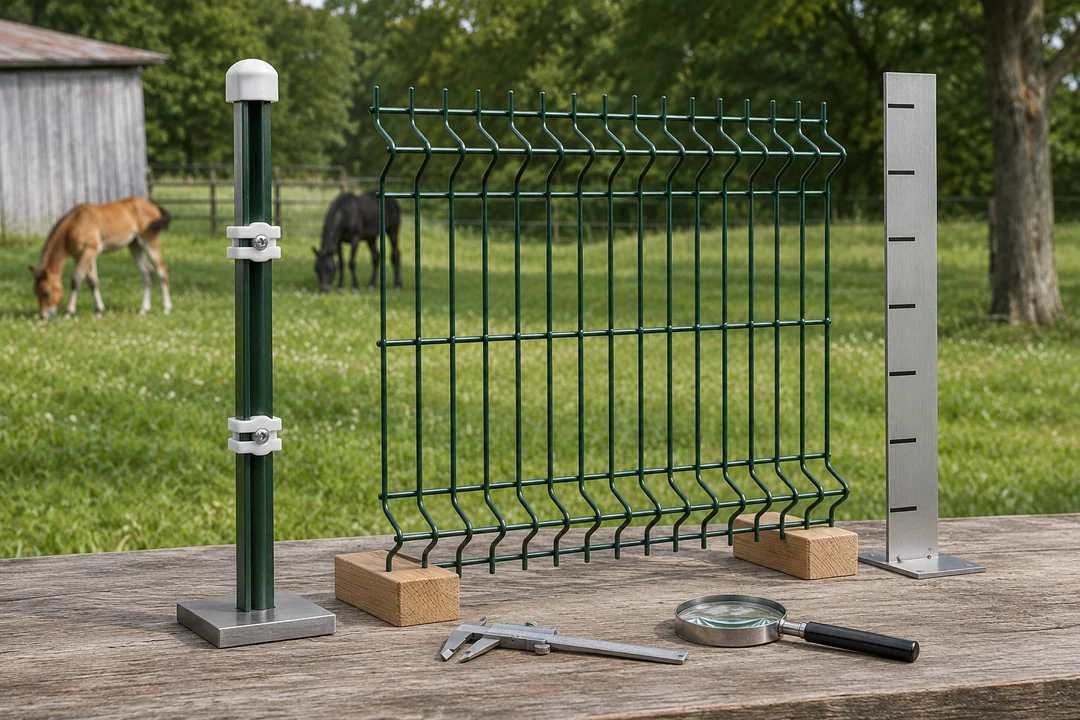
Use documents tied to the quoted option
A marketing label alone leaves the buyer with extra interpretation. Give each record a job and a date. Review the document against the exact quoted option, drawing revision and project requirement.
Check the scope of a record before approving a repeat. Compare the item, finish and drawing revision in the document with your quotation. If the proposed finish changes, use the part-by-part coating schedule to identify which records need review. A replacement part can be checked against the previous measured assembly and its accepted revision.
- DrawingShows geometry, hole centres and support details.
- SampleShows the actual finish and how the retained pieces seat.
- ReportIdentifies the configuration and intended conditions it covers.
Receiving records make reorders easier
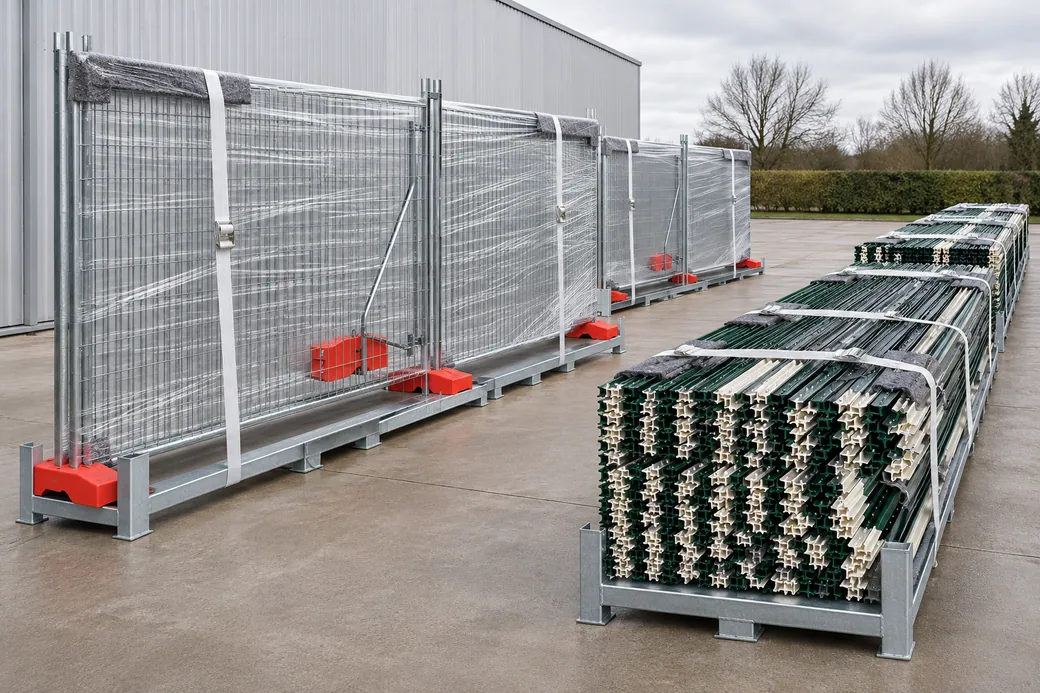
Label each pack by part, dimensions, finish and receiving destination. Count separately the packs of clips or feet that fit more than one run. Keep the revision or approved sample ID with the part record. Keep the receiving marks and measured results with the purchase record.
A short release sequence for a repeat order
Use the sequence after both sides can name the exact line items. Approve only the changes requested for the repeat and keep the supporting reference visible.
- Start with these inputsCapture the first accepted reference
Use a drawing, a sample or a measurement that buyers and receivers can both repeat. Record units and the position where they were taken.
- Specify the orderSeparate fit approval from finish approval
Use the same physical assembly for connections. List the finish by component and record which test or paperwork belongs to the configuration.
- Verify before releaseCompare the new lot with the accepted item
Check repeat labels, dimensions, fittings and quantities against the accepted revision before releasing stock.
Detailed checks for this order
- ConfirmCheck the written dimensions, finish and fitting list.
- CompareUse the approved sample or drawing on receipt.
- RepeatState the same reference and list any deliberate changes.
Related guides for parts and acceptance details
These links move from buying checks to the specific replacement or material issue. Use a more specialized guide if the unresolved detail is a post, clamp, seat or other specific part.
Keep the accepted order reference
Send the quote or prior order reference, your open dimensions or fitting questions, and any required acceptance evidence.
- Reference
- Quote, sample or drawing
- Scope
- Changed parts or same configuration
- Evidence
- The approval and receiving check you need