Coating Options for Welded Mesh Fences at Coastal Sites
For a coastal welded-mesh fence, order a coating schedule for the panel, posts, fittings and cut locations according to their exposure. Both galvanized routes can be discussed with Relia by model or order. Specify the agreed process and inspection evidence before production, including any location where the coating system changes.
- Exposure input
- Site location, wetting and splash details by run
- Evidence to request
- Coating route, acceptance criteria and applicable records by part
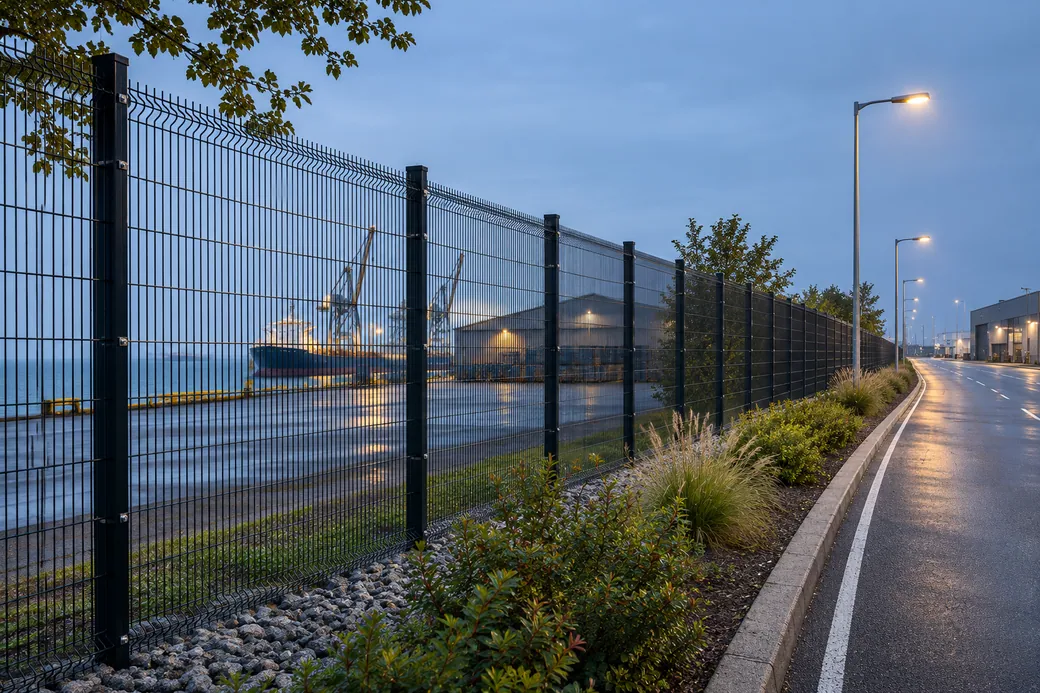
Exposure can vary along the same boundary
Relia uses both coating routes, depending on the model or order. Send us the exposed and sheltered areas and the required finish. We can identify where the same catalogue fence may need separately specified steelwork, clamps and fasteners. Divide exposed and sheltered runs so each can carry its specified requirements in the offer.
Review the V-bend panel before specifying its finishMark splash-prone segments, sheltered sections and frequently handled fittings. This gives your team a way to specify the conditions by component and to request applicable coating evidence for each one.
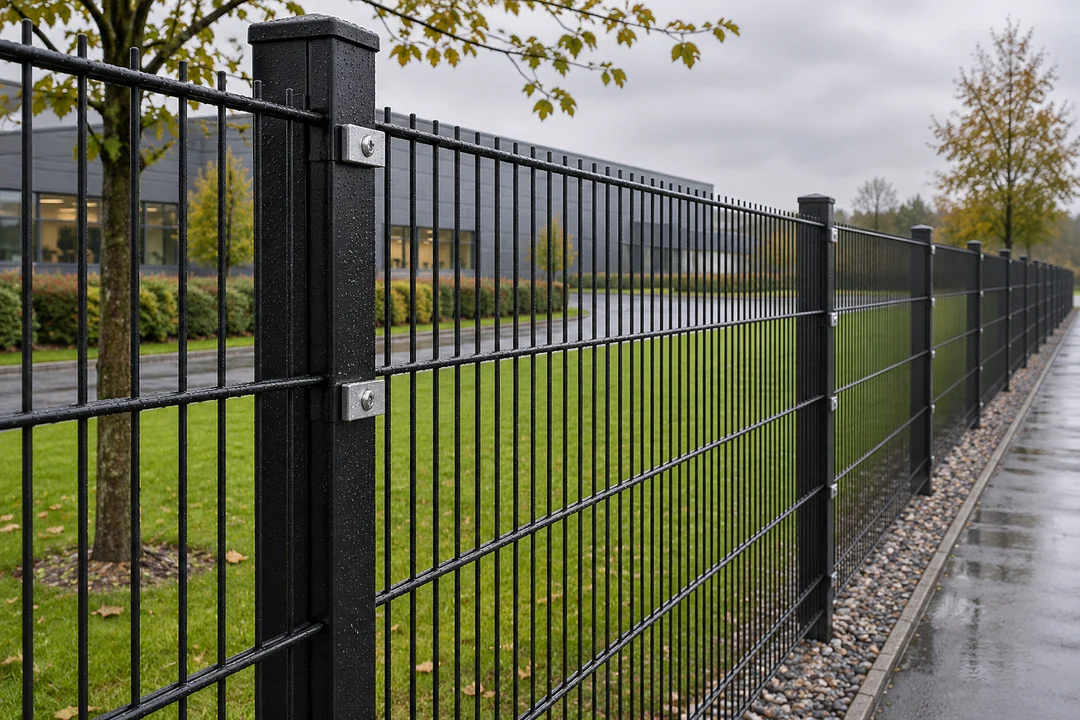
- Steel arrives with zinc
- Confirm how the order treats welds, punched holes and cut ends after fabrication.
- Zinc follows fabrication
- Agree the parts to be batch galvanized and the coating check for the finished steel.
- When the order also specifies powder
- Put preparation, finish and the evidence required on the same drawing for each part.
Build the finish schedule layer by layer
A panel can have a different route from its posts or connection hardware. Keep each part's coating, fabrication sequence and acceptance evidence on its own row so the order can be checked at receiving.
Review the component coating schedule- Wire and panelRecord the agreed steel preparation, zinc route and any additional finish for the selected mesh.
- Formed or joined areasSpecify what records apply to welds, edges and any places treated after fabrication.
- Posts and fastenersList finishes for the posts, clamps and bolts wherever the exposure differs.
- Receiving checkMatch the actual coating record and measured or documented specification to the labelled item.
A part-by-part coating schedule for coastal exposure
A powder-coated panel, cap and exposed bolt can arrive with different base materials and finishes. Give each part its own row and identify the cut edges and contact points that the receiving team will inspect. Give mating parts their own finish rows to make a complete packing and inspection list.
| Part | Record on both quotes | Confirm in samples and records |
|---|---|---|
| Wire and welds | Zinc process, whether it is before or after welding, and any specified coating value and units | Material document tied to the part and measurement locations |
| Posts and caps | Material, surface preparation, finish and selected colour | Signed colour sample and coating record for the quoted parts |
| Clamps and fasteners | Base metal, treatment and exposed bearing faces | Matching hardware and finish by part number |
| Handling and repairs | Agreed care of the coated corner, cut or damaged spot | Acceptance limits and the documented repair method |
Appearance and coating proof are separate checks
Use the finish sample to see the colour and surface. Request the model-specific coating record for thickness or zinc coverage and a relevant test report if the project asks for one. Keep the sample reference with the paperwork. Record the visible colour separately from the chosen surface treatment and measurements.
Tie your finish decision to the part and process. The V-bend panel and twin-wire panel each give finish options. On the release sheet, record the agreed coating route, where the panel is formed or welded and what measurement applies to the finished selection. Ask the supplier to identify the affected edges on the drawing.
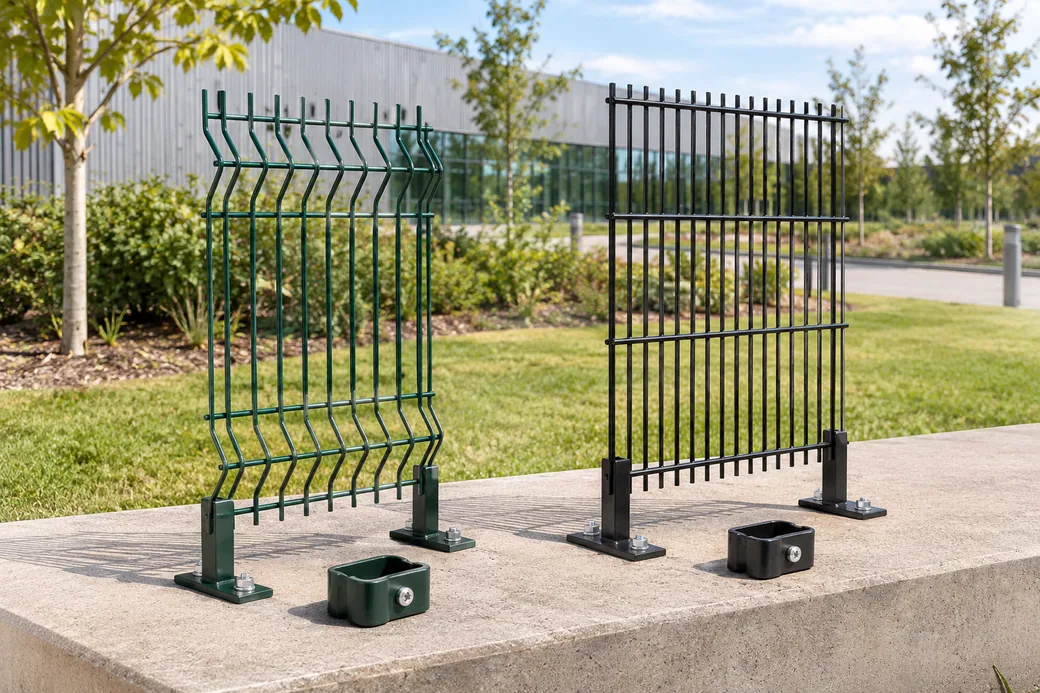
Build a check for each stage of the order
A well-defined check makes it easier to resolve differences between the agreed sample and the delivered bundle. Name the inspection point and applicable record for each important coating requirement.
- Before orderWrite the treatment sequence, finish and methods.
- Before shipmentReview the material and measurement records.
- At receiptCheck visible damage and the agreed handling procedure.
Hardware and edges deserve a line on the quote
The post, clamp and fastener material can differ from the panel. Itemize them and confirm the surface statement for each. Include any cut edges or agreed repair materials in the inspection plan. Agree the condition of cut edges, drillings and small fittings before closing the release.
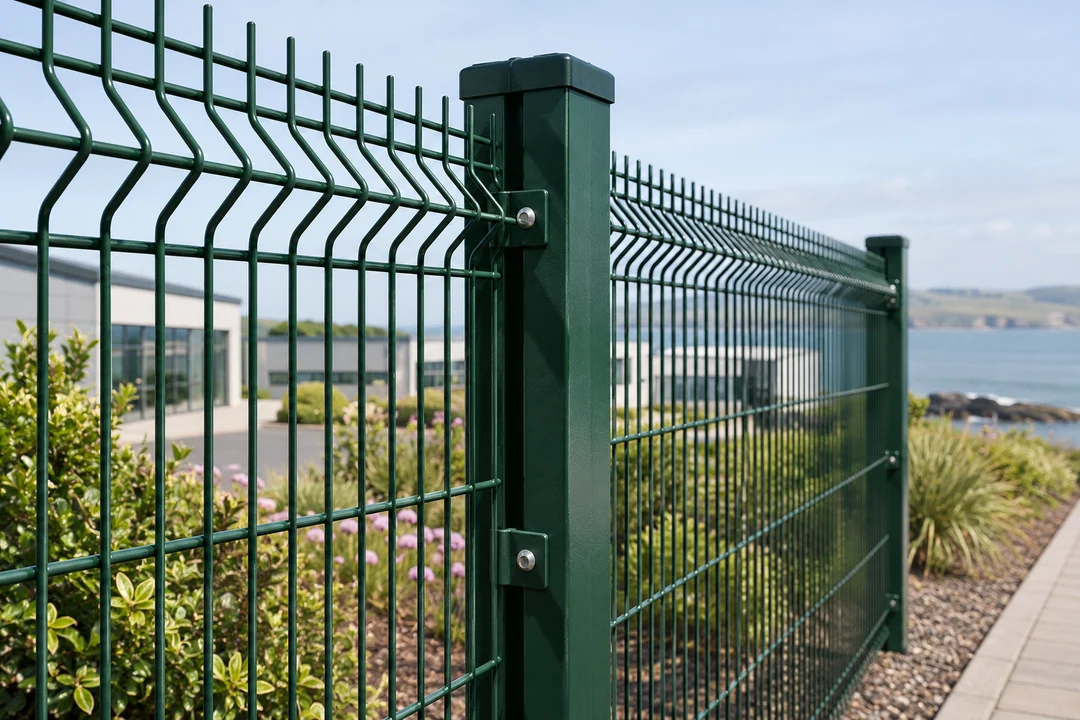
Two galvanizing routes and their inspection points
The production sequence determines which surfaces are checked before and after fabrication. Set the coating route on each line when comparing quotes for projects with coastal exposure. Record which galvanizing route is being quoted for each item and tie the inspection to it.
- Pre-galvanized input
- Zinc on stock
- Cut and assemble
- Check affected areas
- Specified topcoat
- After-fabrication galvanizing
- Fabricate
- Clean
- Hot-dip
- Check finish and fit
- Material and dimensionsMark the parts and their exposure
Identify panels, posts, clamps and fasteners separately. Put exposed edges and sheltered sections on the drawing or finish schedule.
- Fabrication and fitChoose the zinc route by model or order
Pre-galvanized stock needs a check at cut or welded areas. Steel galvanized after fabrication needs its finish and fit checked after dipping. Agree preparation if powder is specified.
- Inspection evidenceRequest a record for the quoted finish
Name the component, coating route and the measurements required for that order. Review the finish on exposed hardware as well as the steelwork.
Detailed checks for this order
- Fabricate from pre-galvanized materialThe steel arrives with zinc already on it. Cutting, punching and welding can change coverage locally. Ask how those areas are handled and which finish is offered for the selected panel and post.
- Fabricate first for batch galvanizingClean and hot-dip galvanize the fabricated steel. Review hollow sections for appropriate vent and drain details with the fabricator. Ask for inspection against the coating requirements of the ordered parts.
- Prepare zinc before applying powderAgree preparation and finish on the selected lot. If your project specifies coat thickness, colour or gloss, put the required measurements and acceptance method on the sample or inspection request.
- Identify fasteners and field work separatelyInclude brackets, bolts and visible edges. Record any field cuts, welds or site touch-up requirements and who signs off on the finished assembly.
American Galvanizers Association on galvanizing routes · Preparing galvanized steel for powder coating · American Galvanizers Association inspection guide
What the mesh listings establish about finish
The 3D description contains powder-coated and PVC wording in separate fields. The twin-wire title describes galvanized and powder-coated steel. Specify the intended layer sequence with the selected geometry. The American Galvanizers Association identifies preparation of the galvanized surface as an important part of a duplex system. Use the catalogue finish field as a starting reference and confirm it for the exact order.
- Published finish and geometry
- Example 50 × 100 mm and 3.0 mm wire with galvanized wire and powder or PVC terms in the listing
- Order evidence
- Actual zinc process and exact final coating, including the post and fittings
Galvanized and powder-coated twin-wire panel
- Published finish and geometry
- 50 × 200 mm and 8/6/8 mm example with galvanized and powder-coated wording
- Order evidence
- Component coating schedule, surface measurement and approved colour
American Galvanizers Association duplex system guidance · Surface preparation for galvanized steel
Browse related products · 3D Curved Welded Mesh · Double-Wire Mesh Fencing
Continue from the surface to the full system
Use the permanent system guide for the overall layout, then compare twin-wire candidates or a particular picket finish against the same site requirements. Move from the agreed surface schedule to hardware fit and the type of supporting system.
- If you are still deciding the fence type3D Welded Mesh and Chain-Link for Warehouse PerimetersCompare the rigid and woven systems before writing the coating schedule.
- If colour and gloss are important at the entranceBlack Powder-Coated Steel Picket FencesApprove the visible finish with a cap, fastener and picket sample together.
Send the exposure map and component list
Share the site exposure, panel and hardware schedule, requested coating standard and records you need. Identify colour and any cut or drilled areas.
- Exposure
- Locations and conditions
- Component
- Panel, post, clamps and hot spots
- Evidence
- Sample and any project tests
Shuyuan Road, Qingdao, Shandong, China
- [email protected]
- +1 404 203 0971
- Phone
- +86 18561762631