Small-Aperture Chain-Link and Rigid Corral Panels
For livestock purchasing, separate small-aperture chain-link for continuous runs from rigid corral panels at gates or handling points. Relia lists a 25 × 25 mm chain-link example and a nominal 6 ft corral panel. Match the measured height, opening, hardware and contact surfaces to each area before placing a combined order.
- Two supply lines
- Chain-link fabric with its fittings and rigid panels with their joints
- Fitted check
- Clear opening, ground line and gate connection on the assembled view
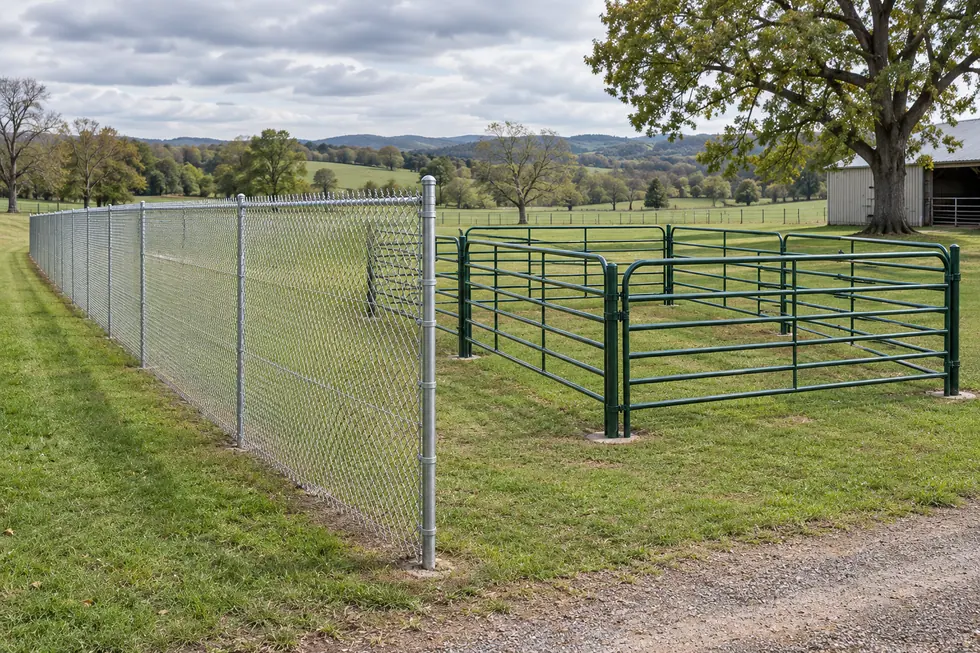
Small-aperture mesh follows the perimeter brief
Relia lists small-diamond fabric and a separate corral-panel option. Tell us which runs stay in place and which need to move. We can review the fabric and post choices separately from the rigid panels, gates and connectors for your brief. Describe the relevant gap and use of each perimeter run alongside the chosen fabric.
See the 1.2 m small-diamond livestock fenceThe 25 × 25 mm chain-link listing gives a 1.2 m and round-post candidate. Confirm aperture, bottom condition, tension hardware and posts against the animals, use and area defined in your approved plan.
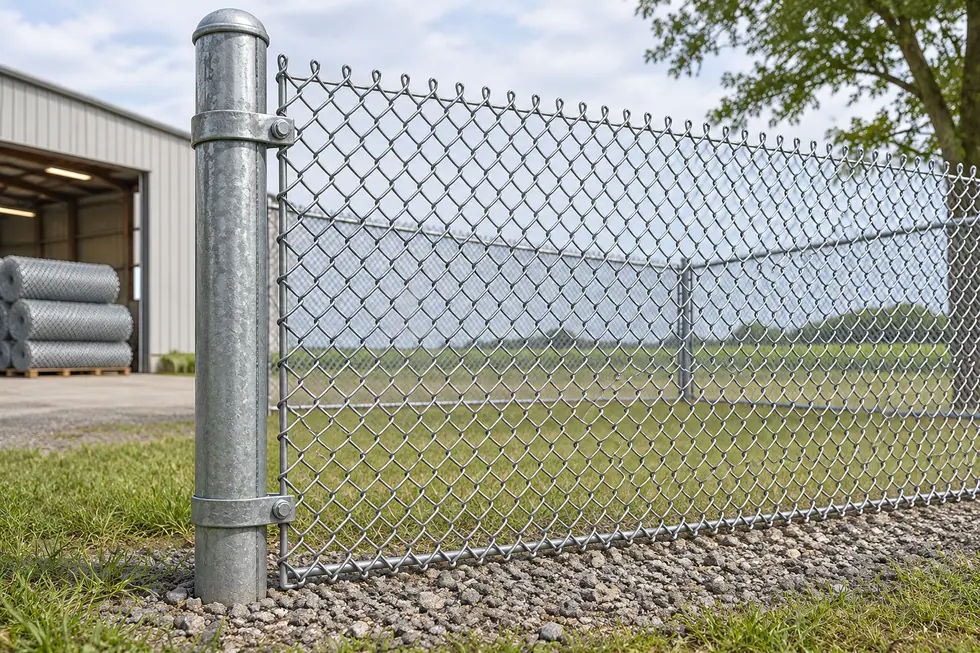
- Permanent enclosure run
- Use the small-diamond roll with its approved support, fabric height and terminal fittings.
- Movable corral
- Identify the framed panel, gate and joining hardware for the area that will move.
- For a combined layout
- Quote the permanent and rigid units separately and check any shared junction with a sample.
Fence segments beside the working enclosure
Plan the farm by how the boundary is used. For each location, the buyer can identify which dimensions and retained connections should be taken from the existing fence.
Separate the roll and rigid panel lines- Open perimeter runRecord clear opening and height of the fabric, and identify terminal parts.
- Working or sorting areaShow the framed panels, gate position and hardware used at adjoining sections.
- Transition pointDraw the retained posts and how a continuous fabric run meets the rigid bay.
- Fitted sampleCheck the installed ground gaps and connection clearance for the actual enclosure.
Different line items for fabric and rigid panels
Record species and use with the site design. Mark any areas that keep original posts or gates, and ask for direct evidence that fittings in the quote correspond to the retained parts. Mark the stretch hardware and rigid joints against the correct scope in the bill of parts.
Check the change from fabric to framed panels. The 25 × 25 mm livestock mesh listing and nominal 6 ft corral panel are separate supply lines. Specify fabric height and opening, then confirm the framed panel dimensions and joining hardware. Mark the ground gap and attachment where the two assemblies meet.
| Run type | Measure on the site or drawing | Confirm for your order |
|---|---|---|
| Small mesh boundary | Finished height and clear openings with retained posts if applicable | Tension and edge details, selected wire and support section |
| Rigid corral bay | Two-axis panel size, tube spacing and connection geometry | Actual 6 ft axis, supplied hardware and approved application |
| Gate and bottom edge | Draw openings, slopes and the project-specified lower clearance | Compatible end parts and position-by-position fixture schedule |
The 6 ft panel needs a dimensioned view
Confirm whether the 6 ft class refers to the width or height in the exact model. Compare tube shape, connection and coating. Include one photo of the existing assembly when the panel will extend an enclosure already in use. Confirm which measured dimension the 6 ft label is describing on the quoted assembly.
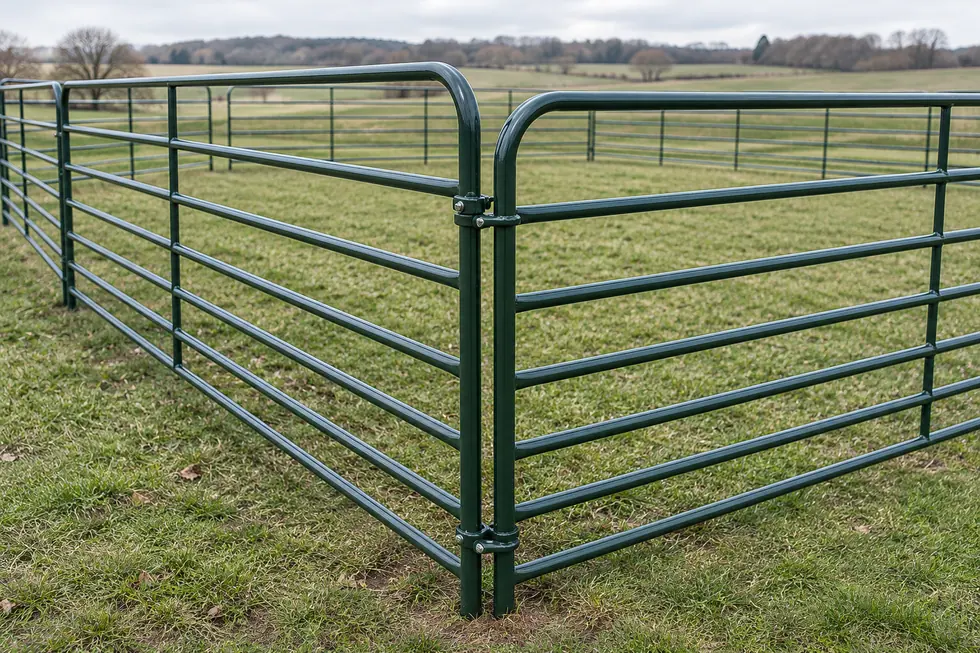
Order repairs and new sections by location
You can group supplies by yard, opening and structure. Keep the parts for one format together when you specify spares. Flag repair quantities by existing condition and give new sections their own takeoff rows.
- Mesh sectionsList fabric, posts and bottom conditions.
- Rigid sectionsList bays, end pieces and connections.
- OpeningsGive dimensions and compatible gate details.
The fit check includes any retained parts
Use the actual post or connector you plan to keep. One compatible sample gives you a reference your team can use on the remaining repairs or on schedule repeats. Use the existing connector and a measured bay photo for a trial fit.
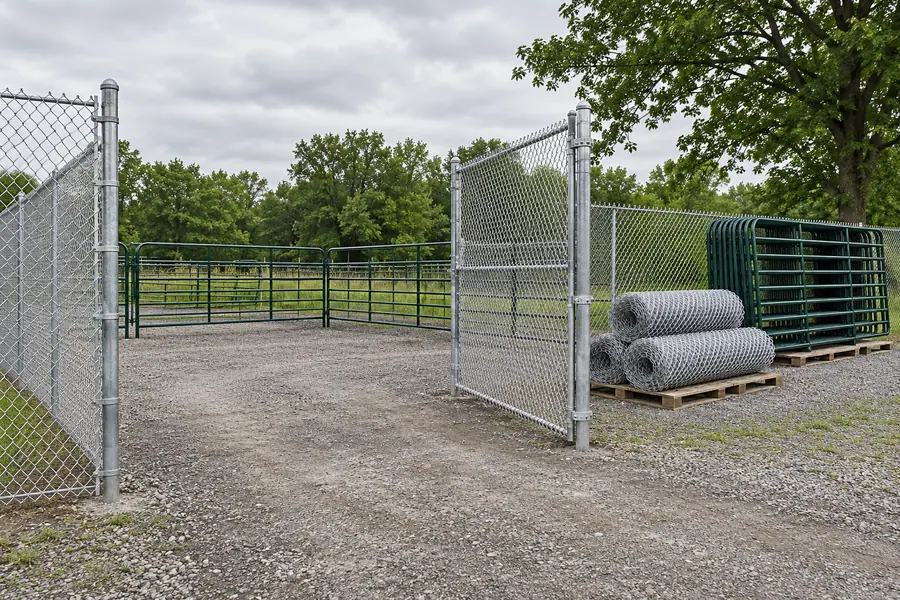
Woven farm fabric and rigid corral framing
A chain-link roll is woven from wire. A corral panel is a rigid framed unit. Order each with its intended support and connection details. Keep the mesh and rigid frame manufacturing and coating details separated in release records.
- Material and dimensionsMark the fixed run and the movable corral
Identify the listed small-diamond roll for the fixed run and the dimensioned framed unit for the other area. Confirm the substrate and finish by item.
- Fabrication and fitFit terminals and corral connectors independently
Review wire diameter and the end detail on the roll. Check the actual rigid panel and gate connector on its own drawing.
- Inspection evidenceApprove a sample junction where systems meet
Use the installed part or gate that will remain. Record the suitable connectors and the measured bay sizes for the order.
Detailed checks for this order
- Confirm the small-aperture wire specificationRecord the selected wire material, core or finished diameter and diamond opening. Measure a representative part of the uncoiled mesh, plus the height and end connection.
- Check the corral's actual dimensions and connectionsUse a dimensioned face and end view for the nominal 6 ft entry. Identify the base material and finish from the approved specification and confirm how the connector meets the next panel.
- Verify the junction and retain fit evidenceHave the site team review suitability for the intended enclosure. Approve a sample with the actual gate or adjoining part and record the lengths and hardware for repeat orders.
CLFMI chain-link fabric product manual · USDA NRCS fence practice and local criteria
Livestock catalogue examples and material confirmation
The corral page lists conflicting metal and material fields. Confirm the substrate, tube section and finish on the proposed drawing. Where a US conservation programme applies, use locally adopted NRCS criteria in the project review. Check actual material, finish and dimensions for the selected catalogue option.
25 × 25 mm livestock chain-link
- Details in the description
- 1.2 m example, 2.0–4.0 mm wire choices and 48/60/75 mm round posts with 1.5/2.0 mm wall choices
- Confirm with the enclosure plan
- Chosen mesh and wire, support and end fittings, and approved bottom detail
- Details in the description
- Nominal 6 ft family with hot-dip galvanized or powder-coated wording
- Confirm with the enclosure plan
- Material, actual width/height, tube geometry, joints and approved use
USDA NRCS fencing practice and local criteria
Browse related products · Chain-Link Fencing · Wire Mesh & Enclosures
Related guides for posts and replacement rolls
The farm-post guide compares T, U and Y profiles. The chain-link guide structures the fabric and tension fitting order for a separate roll purchase. Use the post or roll guide once the enclosure section's governing measurements are known.
Share the enclosure plan and existing parts
Send the animal and site use, enclosure drawing, aperture and height requirements, and any retained fitting photos. Count gate sections separately.
- Use
- Animals and approved enclosure plan
- Fit
- Site, posts and connections
- Order
- Mesh and corral quantities by area
Shuyuan Road, Qingdao, Shandong, China
- [email protected]
- +1 404 203 0971
- Phone
- +86 18561762631