Crowd Barrier Storage Racks and Stillages
A barrier stillage should be quoted against the profile of the barriers it will carry. Relia lists a powder-coated rack and container with a 115 × 105 × 122 cm envelope. Hold a trial using your widest assembled barrier, then confirm the filled stack, fork entry and rated load evidence for the selected rack.
- Catalogue envelope
- 115 × 105 × 122 cm listed for both candidates
- Proof before handling
- An empty and filled measurement set plus documents for the exact rack
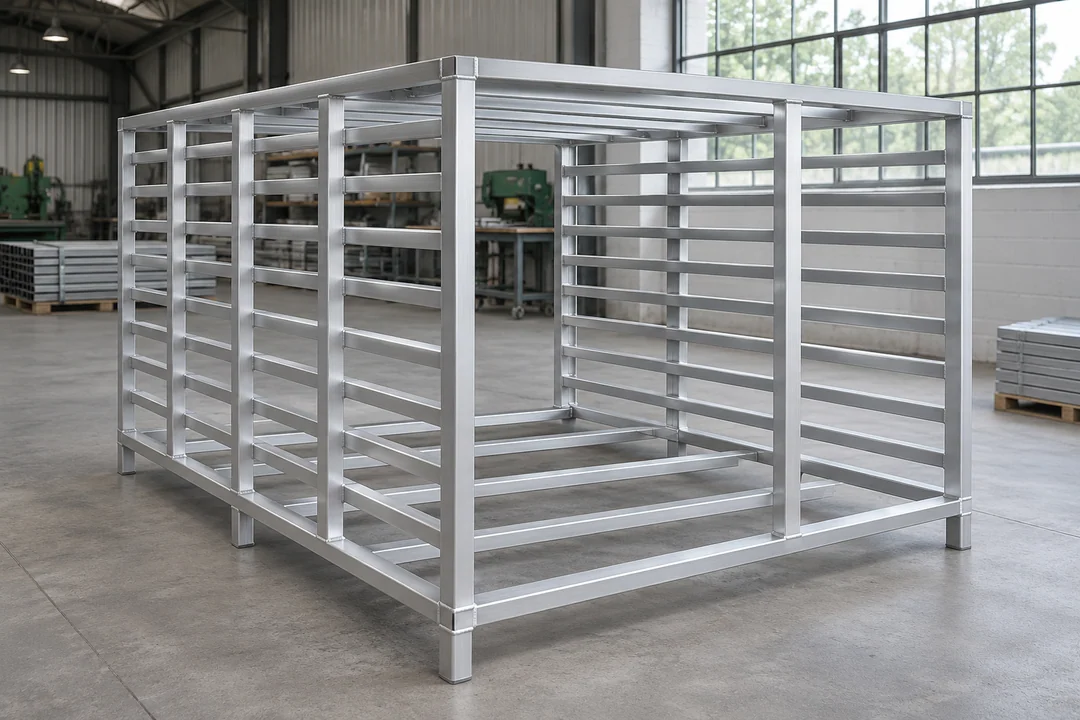
Interlocking parts change the stored shape
Relia lists two powder-coated stillage configurations of similar nominal size. Show us a stack with the hooks and feet in position. We can review it against the stated envelope and separate the usable capacity from the geometry of the quoted rack. Measure a joined or nested sample with the hooks, feet and protrusions that occupy the most space.
Review the barrier stillage dimensions and load fieldMeasure the nested barriers with the feet in the position you use at the depot. Add the hooks and protruding ends to the envelope. We can compare that envelope to the clear space in the rack.
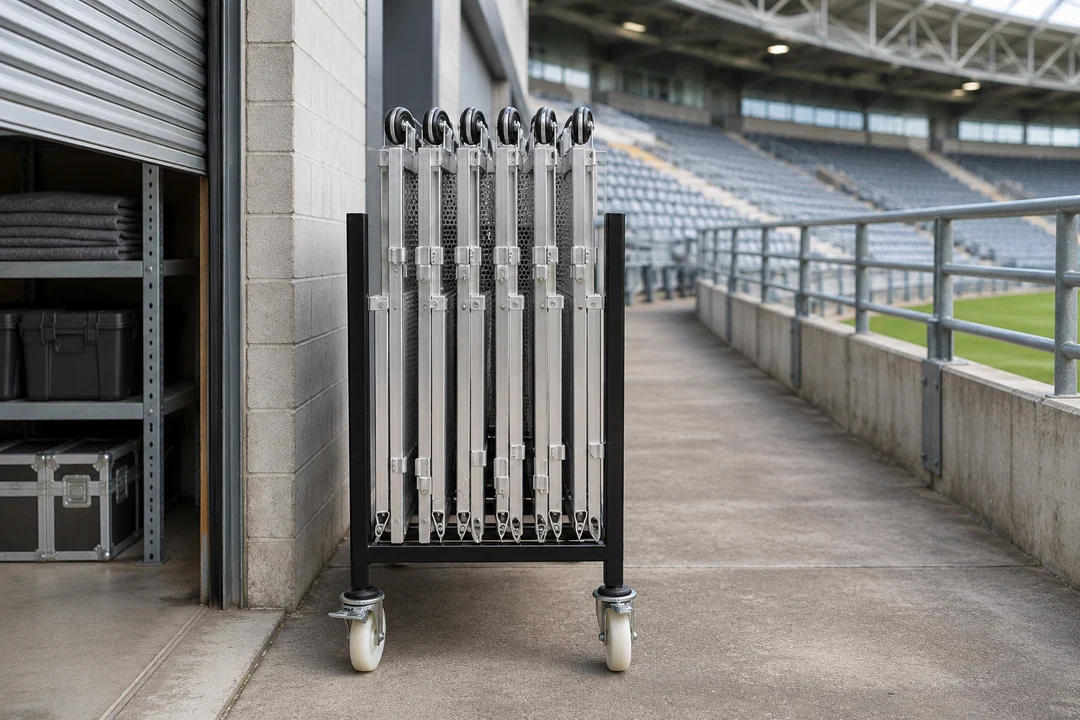
- Storage geometry
- Measure the nested stack at the furthest hook or foot and compare it to the clear opening.
- Movement plan
- Check entry direction, loaded height and the narrowest turn on the real handling route.
- Before choosing a load rating
- Match the documentation to the exact rack, load distribution and handling method.
The empty rack and the loaded stack
Compare the rack drawing with a loaded stack, a handling view and the storage footprint. These views show whether the same rack meets your fleet and your warehouse path.
Compare empty and loaded conditions- Empty footprintMeasure usable internal width and length where feet, hooks or rails may touch.
- Filled envelopeRecord the clearance and orientation after loading representative barriers.
- Fork approachMark fork entries and photograph the clear approach from the real equipment position.
- Load recordRequest the applicable rated-load documentation for the rack and the proposed condition of use.
Fit, handling and load are separate checks
Give each check its own document. A part can enter a rack through the opening and still foul a hook, hinge or foot after it is in position. Allocate one column to usable fit, one to handling access and one to the required load documentation.
| Decision | Record from your fleet or site | Evidence to request |
|---|---|---|
| Loaded envelope | Nested stack width, length and highest hook or foot after arranging actual units | Clear usable rack drawing and interference check |
| Access route | Doorway, turn, height and planned handling equipment | Actual loaded dimensions and allowed lifting interface |
| Storage and movement | Orientation, permitted stacking and distribution of the load | Model-specific rating and approved handling or stacking conditions |
Loaded and empty conditions belong in the handling brief
Record how your team lifts and parks the frame, with your site rules for handling a loaded unit. Several catalogue entries show 600 kg. Ask for the record that matches the model, arrangement and intended handling conditions. Include the widest filled dimension and the route through doorways in the warehouse brief.
Mark the occupied envelope. The listed storage rack and barrier container share a 115 × 105 × 122 cm published envelope. Request a loaded side view showing any projecting feet or hooks and the floor-to-fork entry dimension. Tie the approved handling record to the model you will buy.
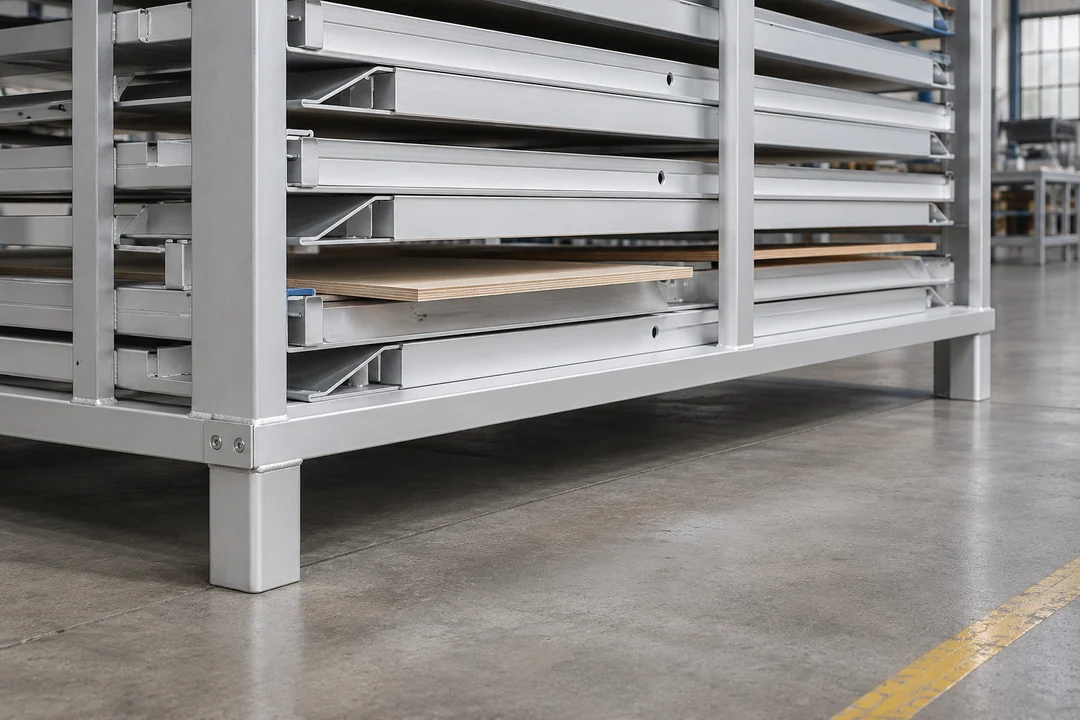
Trial fit with representative fleet stock
You can test a rack choice with a small group in the actual stored orientation. Use several fleet examples in the check if the installed feet or hooks vary.
- MeasureDocument the frame, hooks and feet.
- FitConfirm seating and clearance in one candidate unit.
- IdentifyUse the accepted rack and barrier references when you reorder.
Storage conditions guide the finish and layout
An indoor depot and an outdoor storage yard bring different requirements. Give us the typical exposure and ask for the finish and any permitted stacking conditions by configuration. Mark outdoor storage exposure and drainage on the rack finish specification.
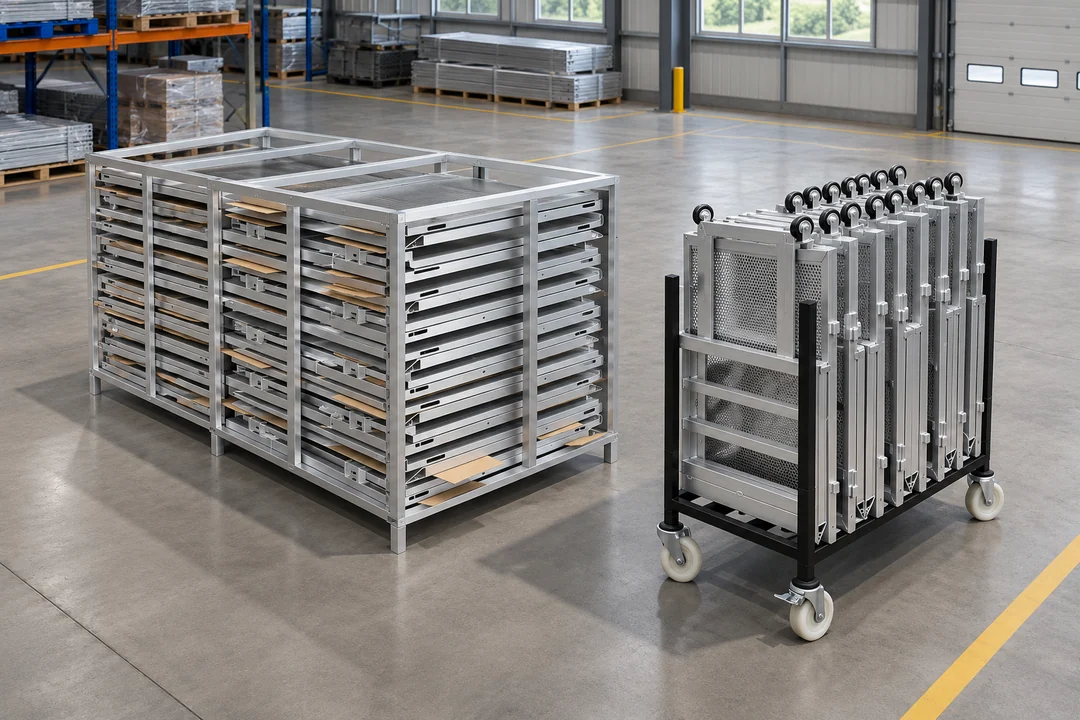
Stillage frame fabrication and fit inspection
The rack envelope, usable clearance and handling interface are separate measurements. Measure each after the frame and its features are assembled. Retain a square frame reading and a filled fit check tied to the item data before the batch ships.
- Material and dimensionsMeasure a real nested stack
Include the furthest hook and foot in both the usable opening and loaded envelope. An outside rack dimension cannot settle the fit.
- Fabrication and fitConfirm the handling interface on the selected rack
Put the opening, stops and planned fork entry on the drawing. Check for interference using the same barrier stack.
- Inspection evidenceTie the rating to its supported use
Request the exact configuration and conditions behind the listed 600 kg field. Storage, lifting and stacking may require different evidence.
Detailed checks for this order
- Set the nested barrier envelopeMeasure the full stack including feet, pins and locating hooks. Put the usable opening and internal clear length on the stillage drawing alongside its outside dimensions.
- Join the rack frame to the approved drawingThe catalogue shows a 50 × 50 mm main-tube option. Confirm actual tube and wall dimensions, inner stops and the handling interface for the proposed variant.
- Verify a finished sample with real barriersCheck diagonals, interference and clearance on the intended access route. Use the documented rating and stated handling or stacking conditions for the exact stock configuration, including the empty unit mass.
The listed envelope and load fields
Both product descriptions identify a 600 kg field and a 25 kg net-weight reference for steel. Confirm whether the load figure concerns storage, lifting or another defined case. A quote needs the exact frame option and evidence for the intended configuration. Confirm which published values refer to the outer dimensions and which refer to reported load.
Powder-coated barrier container
- Listed data
- 115 × 105 × 122 cm nominal, 50 × 50 mm main-tube option and 600 kg field
- Confirm before order
- Interior dimensions, exact material, fork entry and loaded handling limits
Powder-coated barrier storage rack
- Listed data
- Same nominal envelope and a listed steel net weight of 25 kg
- Confirm before order
- Usable bay, locating features, spare parts and allowed stacking
HSE guidance on equipment load markings
Browse related products · Barrier Storage Racks
Choose the rack and its barriers together
Start with your fleet record. When a new barrier is part of the same order, use the venue guide to compare its feet and connector profile. Plan racks using the same barrier references as the event layout and receiving list.
- If you are ordering the barriers at the same timeSteel and Aluminum Crowd Barriers for EventsIdentify the selected pin, foot and barrier mass before planning rack capacity.
- If you are matching an existing fleetHow to Request a Fence QuoteSend a stack photo, measured outer envelope and handling-equipment details.
Share the barrier envelope and handling requirements
Send photos and dimensions of a representative barrier, the stacked orientation, the fork approach and your required storage conditions.
- Envelope
- Barrier with hooks and feet
- Rack
- Usable bay and desired quantity
- Handling
- Equipment and approval limits
Shuyuan Road, Qingdao, Shandong, China
- [email protected]
- +1 404 203 0971
- Phone
- +86 18561762631